Got a message from an unknown number on WhatsApp? Here's how to spot a scam
2026-07-05 · 8 min de leitura · Camila Torres
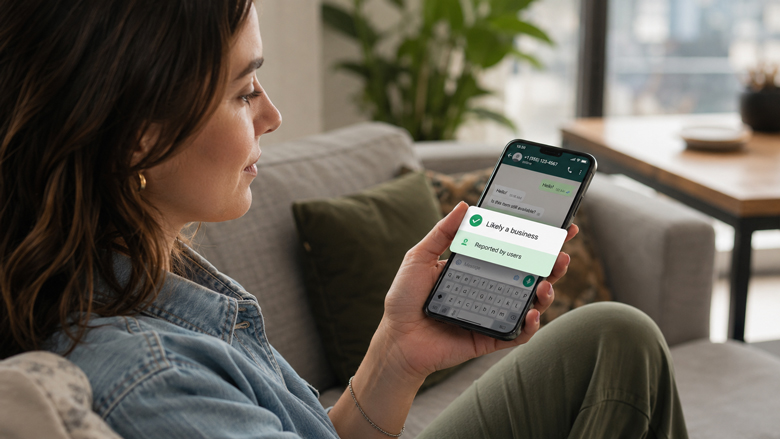
You just glanced at your phone. A WhatsApp notification from an area code you don't recognize. The person says they're a delivery driver, a bank employee, or a relative who changed their number.
Now what? Do you reply? Ignore it? Block them?
That question is becoming more common every day. WhatsApp has over 2 billion active users worldwide, making it the go-to platform for criminals — simply because that's where everyone is. In the US, the FTC reported over $10 billion in fraud losses in 2023. In Europe, Europol says 7 out of 10 digital scams start on messaging apps. In Latin America, WhatsApp scams grew more than 40% according to Kaspersky.
This article will help you recognize the patterns scammers use — and what to do before you reply, click any link, or share your personal information.
Why scammers love WhatsApp
The answer is simple: because it works. When a message hits your WhatsApp, the chances you'll read it are extremely high. And when scammers create urgency — "your account will be blocked," "your package is held up," "I really need your help" — the chances you'll react on impulse go even higher.
WhatsApp has a message open rate of nearly 98%, compared to just 20% for email.
The numbers speak for themselves:
- $485 billion in global digital fraud losses in 2024, according to Nasdaq and Veriff.
- 1 in 4 WhatsApp users worldwide has received at least one scam attempt on the platform, according to the Global Anti-Scam Alliance (GASA).
- 70% of victims only realize they've been scammed after they've already handed over their data (FTC, 2024).
- The "relative with a new number" scam is one of the most common across countries, from the United States to Australia.
70% of victims only realize they've been scammed after they've already shared their data.
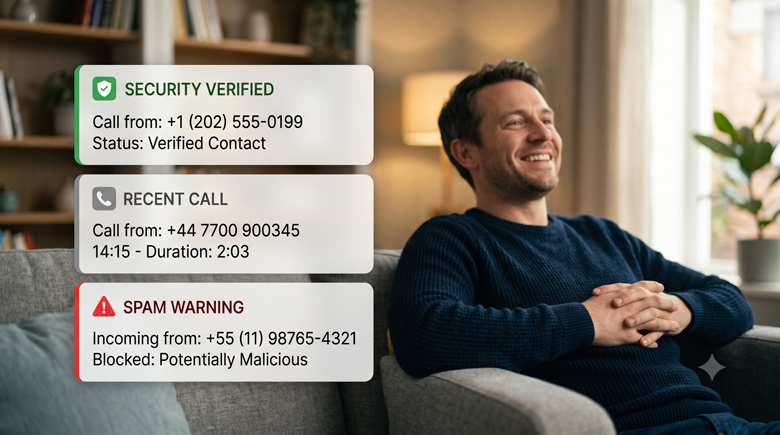
7 types of suspicious WhatsApp messages today
Knowing the patterns is your best defense. Here are the most common scams used on WhatsApp worldwide:
1. The relative or friend with a new number
You get a message: "Dad, save my new number. My old phone broke." Then comes an urgent story — a bill to pay, a transfer that needs to happen right now. Red flag? Any request for money by message without a video call confirmation or a call to the old number.
2. The international number (+1, +44, +234)
Many scammers use numbers from other countries. Area codes like +1 (US/Canada), +234 (Nigeria), or +91 (India) are common in suspicious approaches. This doesn't mean every international message is a scam — but job offers, prizes, or romantic interests from foreign numbers deserve serious caution.
3. The fake package held at customs
A supposed delivery company says your package is held up and you need to pay a fee to release it. The link is already in the message. Europol warns: legitimate delivery companies never charge customs fees via WhatsApp. Always check on the official website.
4. The fake WhatsApp update
Your WhatsApp version is outdated, and your account will be blocked. The link leads to fake pages that install malware or steal your information. Golden rule: WhatsApp never sends links asking you to update.
5. The dream job offer
Work-from-home, part-time, high salary, under a well-known company name. The application form asks for your ID documents and bank details — and with that information, scammers open accounts and apply for credit in your name.
6. The fake government benefit
An urgent message supposedly from a government agency — IRS, Social Security, HMRC — says you have money to claim or your benefit will be canceled. The link leads to a fake site that collects your personal data. Government agencies don't send benefit notices via WhatsApp.
7. The fake investment scam
A high-return proposal, usually built over days or weeks. The scammer invests time to gain your trust before asking for money. It's called pig butchering: a crime that caused $3 billion in losses in the United States in 2023 alone, according to the FBI.
What all these scams have in common
When you stop and look, they all follow the same pattern:
- Contact from a number you don't have saved — or a "new" number from someone you know.
- An urgent story that doesn't give you time to think clearly.
- A link or request for data that looks legitimate at first glance.
- Pressure to act now, before you have time to verify.
Urgency is the scammer's main tool. When you feel pressured, your brain shuts down critical thinking and switches to reaction mode.
That's exactly when the scam works. So the first thing to do when you get a suspicious message is stop. Breathe. And check before you act.
What to do when a suspicious message arrives
Before you reply: check the number
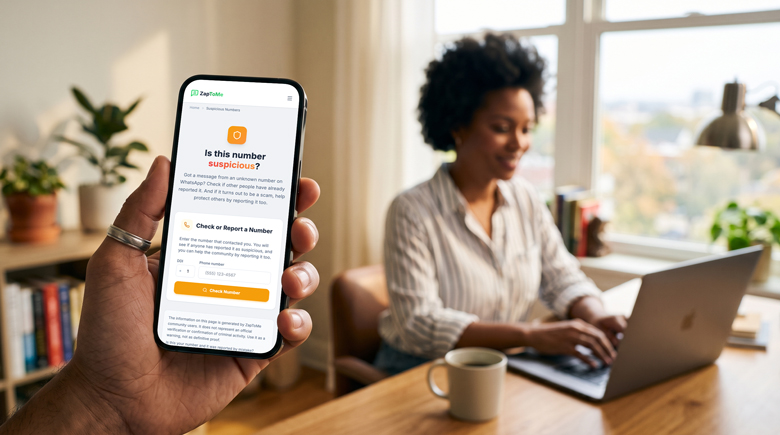
The first thing most people don't do — but should — is check if that number has been linked to scams before. There's a free tool for this: the ZapToMe suspicious number checker. You enter the number and see if it has been reported by other users.
The logic is simple: when multiple people received the same approach from the same number, the odds of it being a scam are extremely high. And when you report it, you're helping the next person who gets that message.
The tool requires no sign-up, doesn't store your data, and installs nothing. 100% private and cookie-free.
If the number doesn't appear in reports
That doesn't mean the message is safe. A number could be new or not yet reported. The warning signs still apply:
- Don't click links sent by unknown numbers, even if they look legitimate.
- Never share your WhatsApp verification code with anyone.
- Call to confirm any financial request, using the old number you already have saved.
- Enable two-step verification in WhatsApp settings — this single feature blocks most account cloning attempts.
If you think you've been scammed
Act fast:
- Disconnect your phone from the internet immediately.
- Change your email, banking app, and social media passwords.
- Tell family and friends that your number may have been compromised.
- Contact your bank to block transactions.
- File a report with your local police cybercrime unit or online reporting portal.
- Report the number directly in WhatsApp (hold the message > Report).
Reporting also protects others
Reporting also protects others.
When you report a suspicious number, you're not just protecting yourself — you're building a layer of collective safety. The same number that messaged you has probably contacted hundreds of other people too.
When that number is reported in a public database, the next person who searches for it will see the warning before they reply.
That's why the ZapToMe suspicious number database exists: you check, you report, and the community becomes safer — without installing anything, creating an account, or handing over your contact list.
Quick checklist: how to tell if a number is suspicious
Before you respond to any message from an unknown number, run through this list:
- Is the number saved in your contacts? If not, that's a warning sign.
- Does it start with an international code (+1, +44, +234, +91)? Extra caution needed.
- Does the message sound urgent or threatening? Classic scam sign.
- Does it ask for your SMS code, password, or bank details? Never provide them.
- Does it contain a link? Don't click it before checking the source.
- Have you searched for this number in a scam report database? Do that first.
Is it going to get worse before it gets better?
In 2026, scams are harder to spot than they were two years ago.
Unfortunately, yes. Easy access to AI tools has made scams more personalized than ever. Well-written messages without obvious grammar errors, combined with real personal data obtained from previous data breaches, make these attempts far more convincing. The obvious spelling mistakes that used to give scammers away? Gone.
Checking the number before you reply has become a necessary step — not paranoia.
Frequently asked questions
How do I know if a WhatsApp number is a scam?
Search for the number in scam report databases like the ZapToMe suspicious number tool. Also be wary of messages with urgency, requests for money, or links from numbers you don't have saved.
What should I do if I get a suspicious WhatsApp message?
Don't reply, don't click any links, and don't share personal information. Report the number within WhatsApp (hold the message > Report) and check public scam report databases.
Can I find out who owns an unknown WhatsApp number?
You can check if the number has a WhatsApp profile picture and search scam report databases like ZapToMe.
Can I report a suspicious number anonymously?
Yes. The ZapToMe tool lets you check and report numbers without signing up, logging in, or having your data stored.
What are the most common WhatsApp scams in 2026?
The top scams in 2026 include the fake lawyer scam, the "new number" family scam, phishing with malicious links, and fake investment schemes with romantic profiles (pig butchering).
Check a suspicious number now
See if a number has been reported by others. Free, anonymous, and 100% private.
Check Number